
A DAY IN THE LIFE OF A MARINE BIOLOGIST - NISHAD - SEA TURTLE BIOLOGIST INTERN
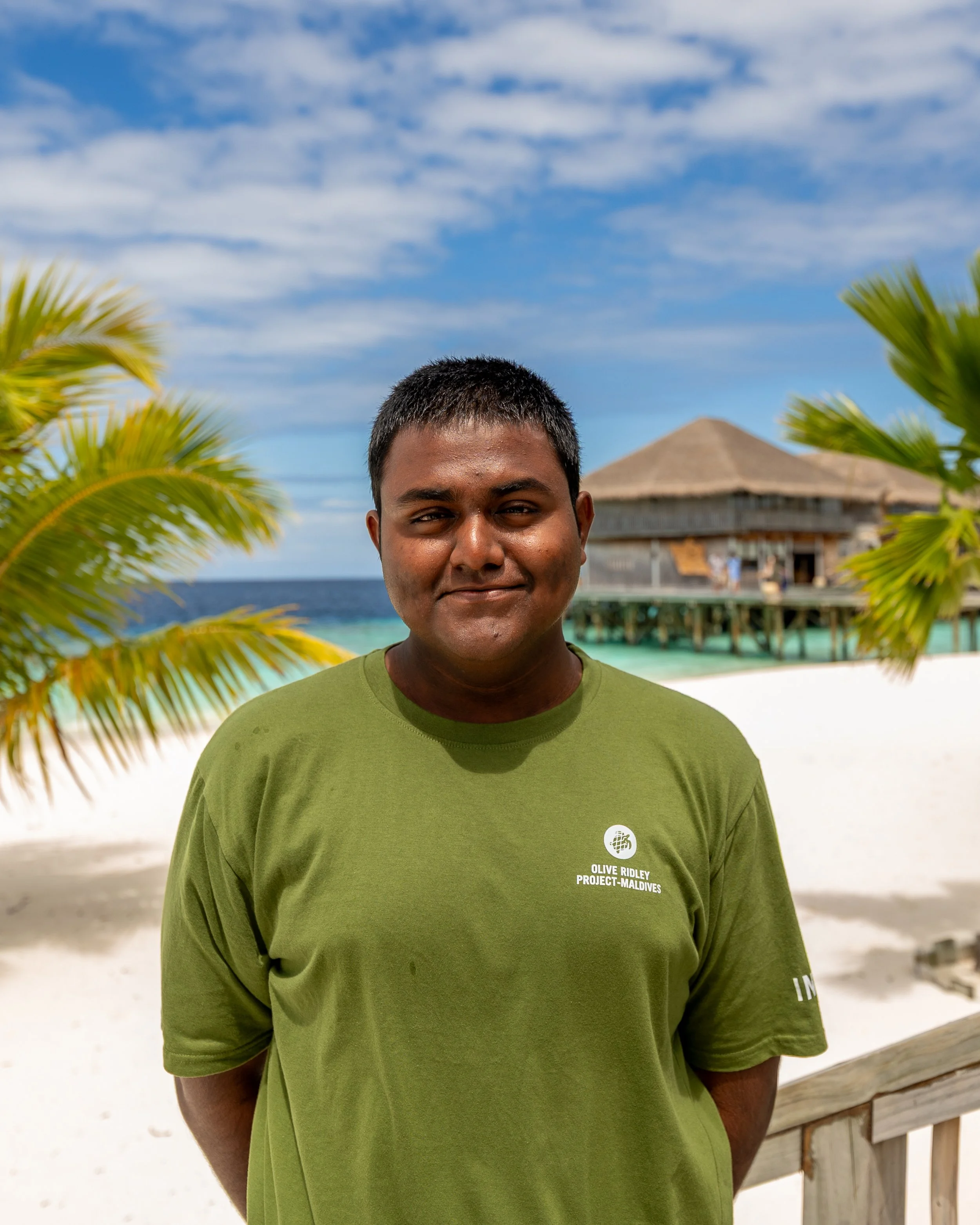
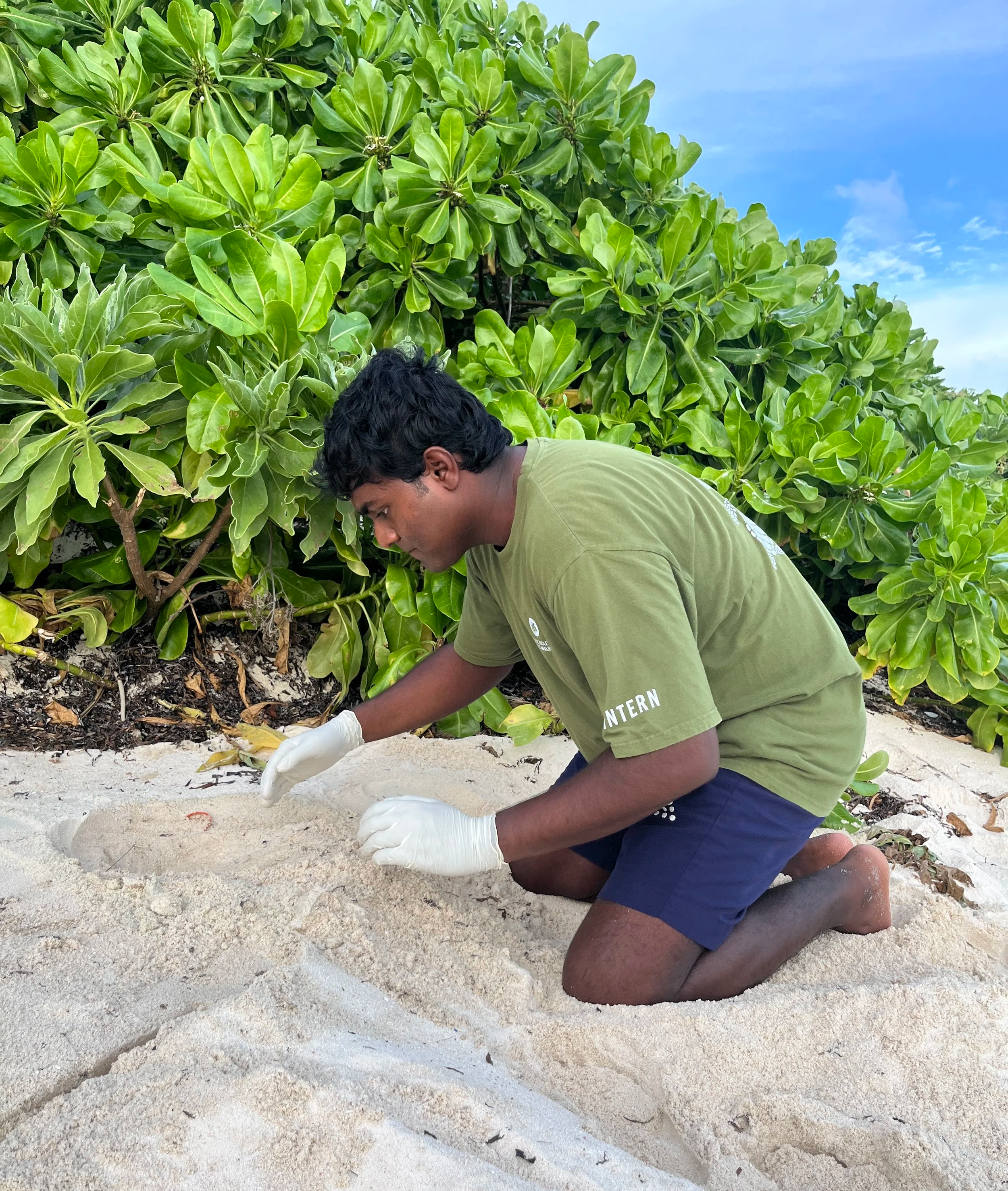
This month in our series of: “A day in the life of a Marine Biologist”, we will be learning from Nishad, our current Olive Ridley Project Sea Turtle Biologist Intern at Six Senses Laamu.
Quickfire Bio
Role Sea turtle Biologist Intern
Years in Marine Sector First time working in any marine related job
Home country Maldives
Special interests Sharks, Turtles
Fun facts I love singing
Favourite Maldivian word and meaning Redhan - bioluminescence
Nishad, what inspired you to become a marine biologist?
Growing up on an island surrounded by the ocean, and with the influence of my father who was a fisherman, the ocean has been something that always sparked my interest. I also grew up watching a lot of nature documentaries and was always fascinated by the creatures of land and sea. I never decided to pursue marine biology because I had a fear of deeper water, it seemed out of reach as I thought I needed a background in marine biology to start out.
Can you tell us a bit about your journey—how did you end up working with MUI?
I had known about MUI before, as I had participated in the Turtle Festival. But I learned about the job through a good friend, Sharoof, the previous Sea Turtle Biologist Intern. I had a lot of concerns because I didn't even have my Open Water scuba certification when I first started, and it was also my first time working in the marine field. But I was still made to feel very welcome by the MUI team and in my role.
What’s something most people don’t realize about marine biology / working with the community?
A lot of people have the misconception that all I do every day is go into the ocean, have fun, and only care about the animals. But that's far from the truth. I go to the ocean to do important scientific surveys which help us keep track of turtles in Laamu, this gives insights and helps us understand that the education and the conservation work we do is helping their populations
A Typical Day
What does a normal workday look like for you?
There's no normal workday, no two days are the same, whether it's starting my morning with a snorkel or starting it in the office doing turtle IDs.
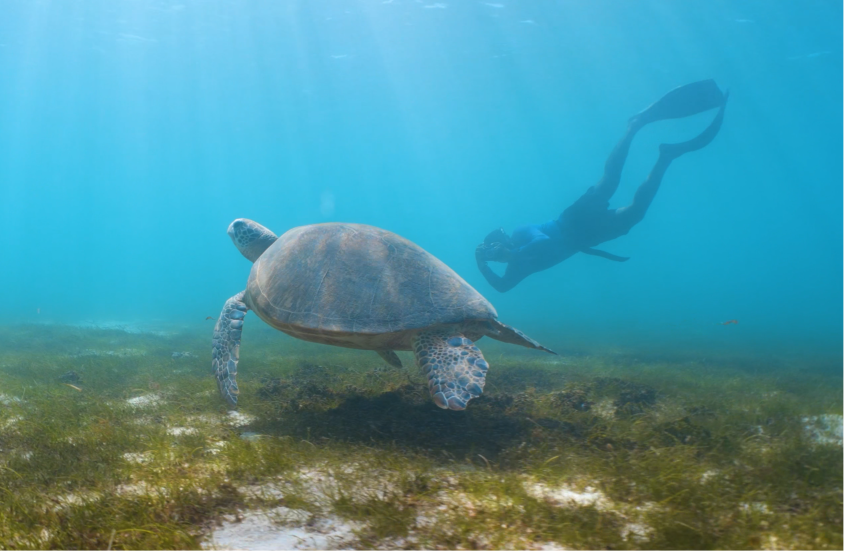
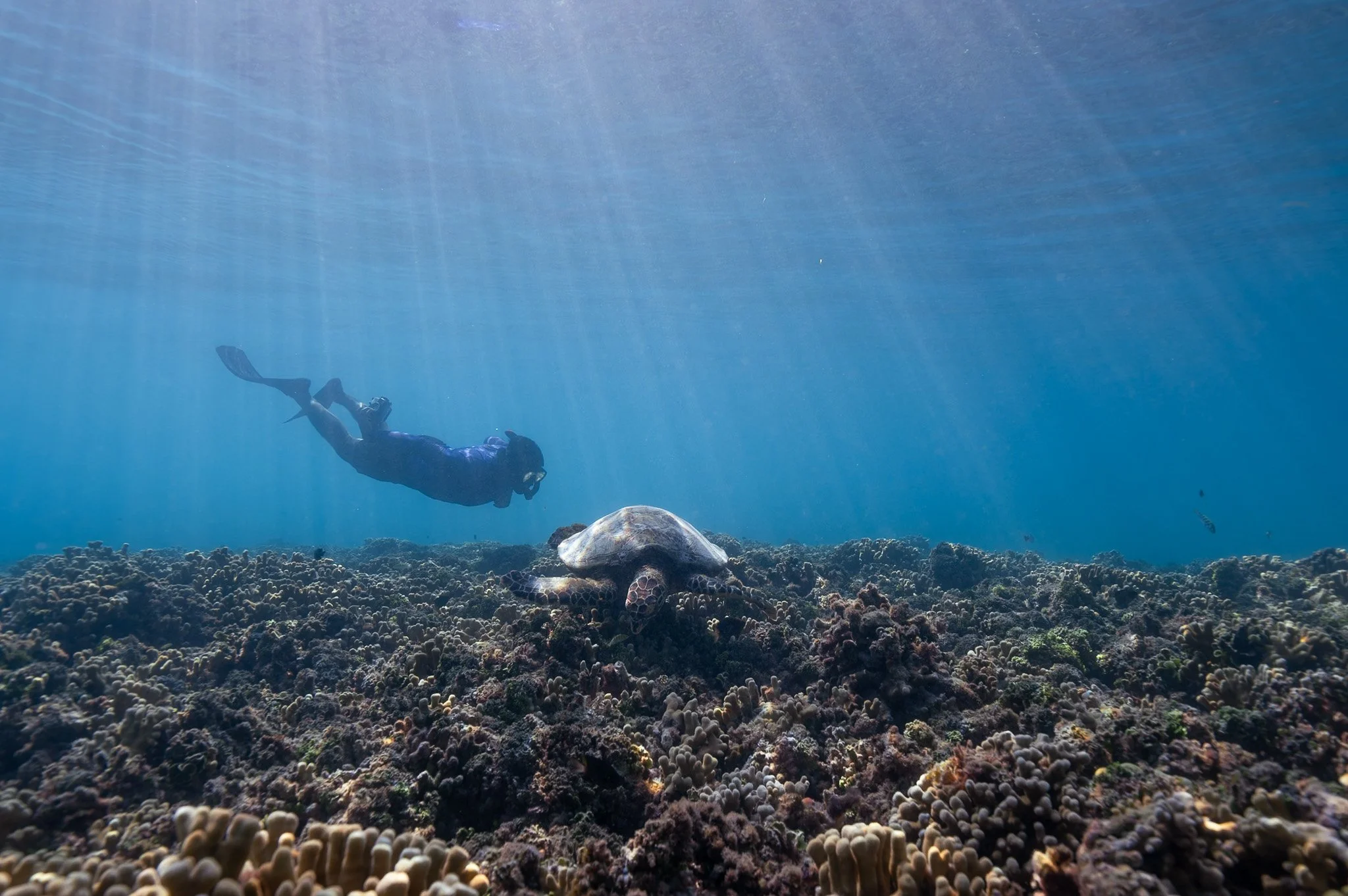
On the days that I am on a research boat, I start my mornings very early just to give myself time to properly wake up. By 8 a.m., I head to the dive center to get my diving gear ready. I take my camera and a slate with me on the dives, and on the slate I note down all the turtles seen during the dive, their species, behaviour, and an estimate of their size, sex, etc.
A few times per week, I am the guide of the group snorkel for our guests, which is also an important opportunity to collect turtle IDs. Usually, for the rest of the day, I am in the office, where I input all the data I collected from the dives and snorkels. I start by entering all the data into a spreadsheet, which then creates turtle sighting records into which I input all the required information. After this, I make my way to the Internet of Turtles (IoT), where I upload the pictures of the turtles I took and enter data such as where the turtle was sighted, what it was doing, etc. From there, I use suggestions from the AI to determine whether we already have that turtle in our database or not. If the turtle is one we already know, it is pattern-matched and recorded under that turtle's sighting records. If it is a new turtle, it is assigned a temporary ID number, which will be reviewed by our Lead Scientist. If the image quality is good enough and it shows the right side of the turtle's face, the turtle is assigned a national ID number.
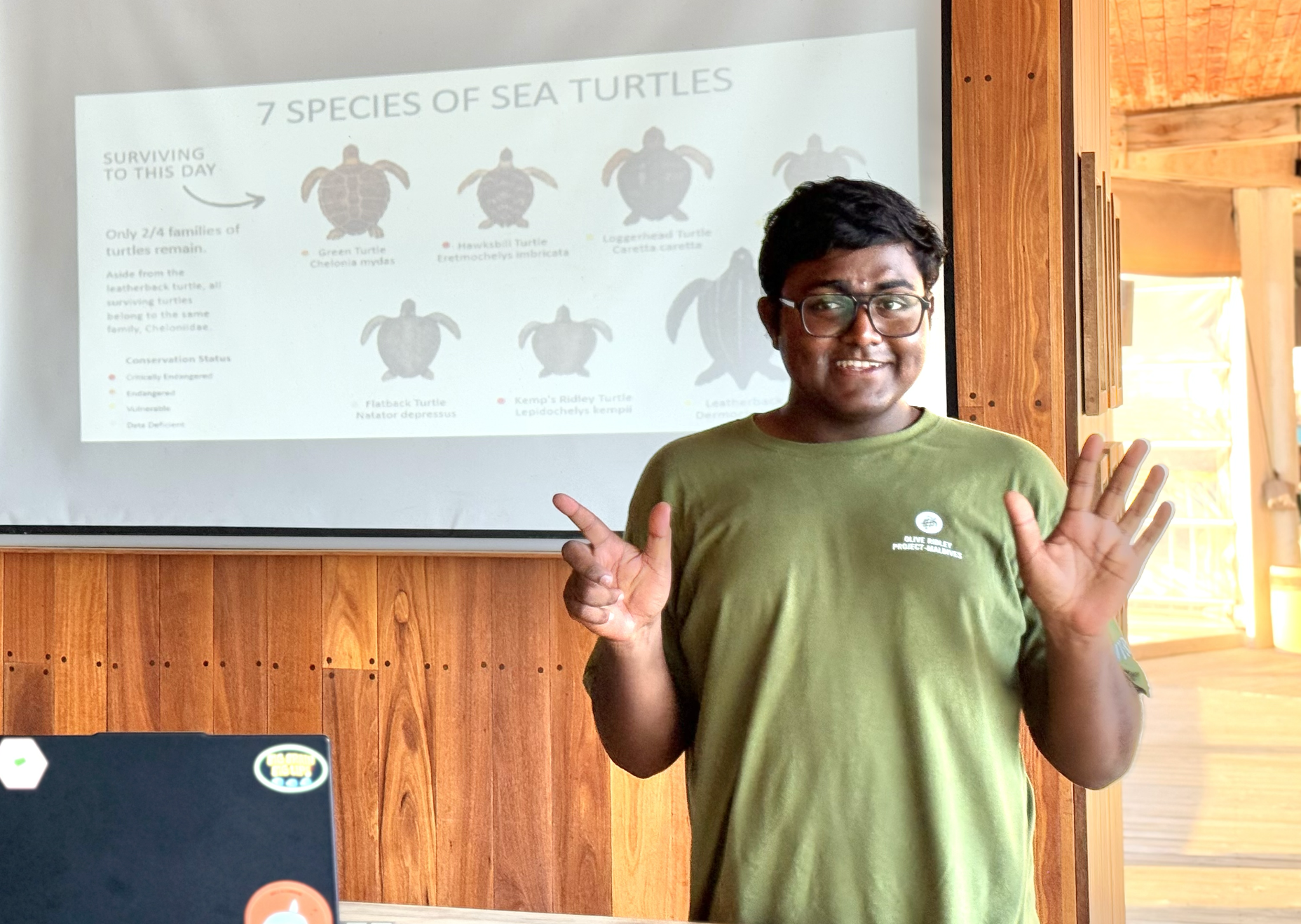
Guest educational activities are also an important part of my work. I alternate with the MUI team on SHELL shifts to welcome guests in our marine education center or to lead SHELL tours, deliver kids club or Junior Marine Biology sessions, turtle presentations and guide Dolphin Cruises.
Project Spotlight
What project are you most involved in right now?
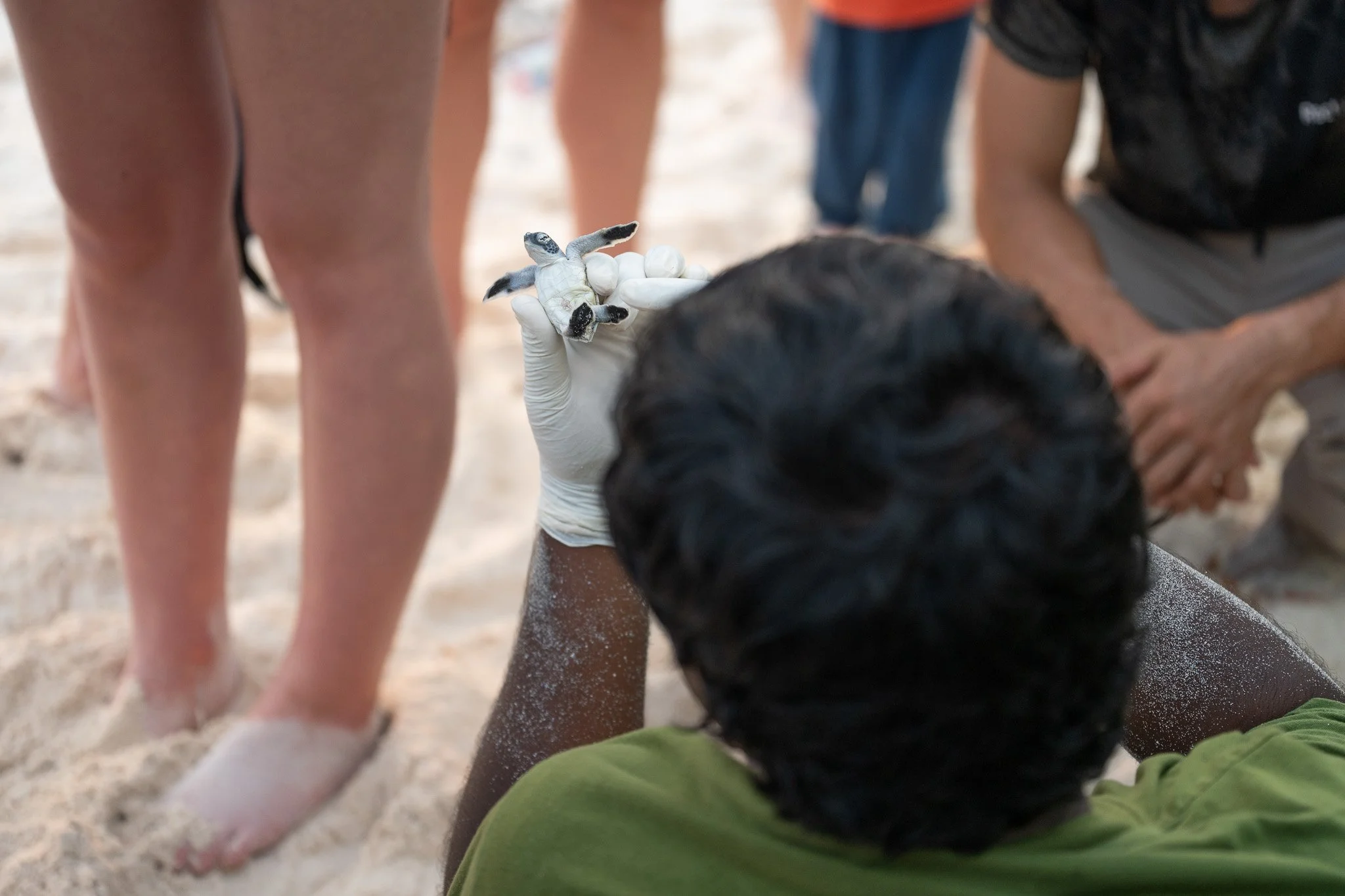
Turtle Nesting - I’m responsible, together with the turtle biologist from ORP, for monitoring turtle nests around the resort until they hatch. Once that happens, we organize a hatching event for the guests, in order to offer them an unforgettable experience seeing the baby turtles, and two days later we conduct a nest excavation to collect data and find out the success rate of the nest.
Laamaa Faru Festival - We have a big festival that involves communities and NGOs, marine conservation, culture and sustainability. I am helping to create educational material about turtles in Dhivehi, my mother language, and also contributing to organize the logistics, like finding accommodation during the festival.
What’s one recent moment that made you proud?
Finding the egg chamber of a turtle nest all on my own without any help from any professionals, which sometimes can be quite hard because the turtle mom puts a lot of work in disguising her nest, in order to keep the eggs safe from predators.
What challenges do you face in your work, and how do you overcome them?
There is a lot of stigma surrounding the protection of sea turtles in the Maldives. Many people still view them as a viable food source; however, this could not be further from the truth. Although eating sea turtles is regarded by some as a cultural practice, sea turtles can accumulate harmful contaminants and naturally occurring marine toxins in their bodies throughout their lives. When consumed, these substances can be transferred to people and may accumulate over time, potentially causing serious illness. Since the ban on catching and consuming sea turtles, illegal take has become the primary way for people to obtain them. Unfortunately, some people still do not understand how important sea turtles are to the health of marine ecosystems and the fact that they are still endangered animals in the Maldives.
Impact & Purpose
Why does your work matter—to you, to the reef, to the community?
First, it helps to protect and protect important and endangered species, such as Green Sea Turtle which is endangered in the Maldives and Hawksbill Sea Turtle, critically endangered all across the world from extinction. And doing so, we’re protecting entire ecosystems and livelihoods surrounding it, securing a good future for the next generations.
What are the biggest changes you’ve seen since working at MUI / or since working in this field?
I’m more confident about myself, how I present myself, my freediving and scuba diving skills as well.
How do you think tourism can better support marine conservation and the local community?
Tourism can support local communities providing new knowledge but still respecting their culture and daily lives. They can also help setting proper conservation guidelines in order to protect our environment, tackling traditions that have been damaging ecosystems for generations without a better understanding of the impacts.
Advice & Reflections
What advice would you give to someone wanting to work in marine conservation?
My advice would be: if you feel like it's for you, go for it. Don't spend your life wondering, "Maybe I could have," or, "Maybe it's not for me." If you have a love and passion for conservation, go for it.
I have met some of the kindest, most passionate, and most inspiring people in my life since I came to do this internship. Maybe it's not the same everywhere, but I'm sure that people in this field all share the same compassion for the ocean that you do. That alone is enough to form meaningful connections with people.
For me, simply having a great team and building these connections has brought out a happier side of me, and I am forever grateful to everyone.
How do you stay hopeful in the face of the climate crisis?
I hope that people can take example from the work that we as marine conservationists do and try to help in their own way however they can. It doesn't need to be a huge amount of donations or making an NGO or making multiple plans for conservation. A little can go a long way, I am hopeful that just having an active voice for conservation will eventually be enough to change people's minds.
What skills should someone have if they want to work as a marine biologist in a resort environment?
Good teamwork
Good time management skills
Multitasking
Excellent communication skills
Confidence in the water
Passion for the ocean
If you could tell the world one thing about the ocean, what would it be?
It's not as scary as it seems. When you love the ocean it loves you back.
Is there something you wish you would have known before you pursued this career?
That data entry sometimes can be boring or tiring, but it's also fun to do. Also, how fun it actually is to be around a team of people who love the same things as you and just have close connections that push you to be the best you can be.
Your favourite thing about the Maldives?
The reefs.
Day-in-the-Life Snapshot
6:00 am - Wake Up
7:30 am- Breakfast at staff Canteen
8:30 am - Research Dive for Turtle IDs
11:00 am - Guiding Guest Group Snorkel
13:00 pm - Lunch
2:00 pm - Office time working on data entry or classroom session with students about turtles
5:30 pm - Daily team meeting to discuss the day and plans for tomorrow
6:00 pm - Presentation about turtles
7:00 - 23:00 pm - Nest Watch (staying alert in case nest hatches)
8:00 pm - Dinner with the team
A final question: What’s your favorite quote?
"How you live your life is your business. Just remember, our hearts and our bodies are given to us only once." — Mr. Perlman, Call Me by Your Name (2017)