
A DAY IN THE LIFE OF A MARINE BIOLOGIST - ASLAM - MANTA RAY RESEARCHER
This month in our new series of: “A day in the life of a Marine Biologist”, we will be learning from Aslam, Manta Trust’s manta ray researcher and assistant project manager at Six Senses Laamu.
Aslam is currently working as the Assistant Project Manager for the Manta Trust as part of the Maldives Underwater Initiative (MUI) team. His work focuses on manta ray research and conservation, and he is actively involved in projects including Eyes on the Reef (using RUV and EOTR systems), Stereo Video Photogrammetry (SVP), ultrasound studies, and SCUBA-based surveys at manta ray cleaning stations. With a background in leading dives and marine excursions, Aslam’s passion for manta rays led him to research, where he now combines fieldwork, data analysis, and education.
Aslam, tell us a little bit more about yourself and the work you do with MUI!
I am the Assistant Project Manager for the Manta Trust in Laamu Atoll, working as part of the Maldives Underwater Initiative (MUI) team at Six Senses Laamu. My role supports manta ray research and conservation efforts across the atoll, assisting with projects such as SCUBA-based manta surveys, photo-identification, data management, and field logistics. Through this work, I help collect vital data to better understand how manta rays use Laamu Atoll’s cleaning stations, their behaviour and movement patterns, and how best to protect them within this fragile ecosystem.
Originally from the Maldives, I have been working in the marine sector since 2014. I have a strong passion for marine megafauna, with a particular interest in manta rays and sharks. Outside of fieldwork, I enjoy surfing and making the most of life in the islands. One of my favourite Maldivian words is “Suhkathuraa,” the Dhivehi word for plankton. It’s a word that’s rarely used and not widely known, but a meaningful one, especially considering how essential plankton is to the marine ecosystem and to species like manta rays. My work reflects a deep-rooted connection to the ocean and a strong commitment to marine conservation in the Maldives.
Can you tell us a bit about your journey—how did you end up working with MUI?
I’ve always been fascinated by marine life, and spending years leading excursions and dives only deepened that connection. My growing interest in manta rays, in particular, inspired me to focus my career on understanding and protecting these majestic creatures.
After several years guiding dives and marine excursions, an opportunity arose to join a project in Laamu Atoll. My passion for manta rays and desire to better understand their behaviour led me to MUI. Working with MUI has allowed me not only to focus on manta research, but also to broaden my knowledge of other marine species and habitats, placing me in an environment that encourages continuous learning and growth.
What’s something most people don’t realize about marine biology / working with the community?
Many people don’t realize how much hard work goes into marine biology behind the scenes. While diving and surveys are the most visible parts of the job, a lot of time is spent at a desk processing data, maintaining and preparing research equipment, and coordinating fieldwork. Engaging with local communities is another essential part of the work building trust, encouraging involvement in ocean conservation, and educating people about the ocean can be challenging, but it’s also one of the most rewarding aspects of the job.
A Typical Day
What does a normal workday look like for you?
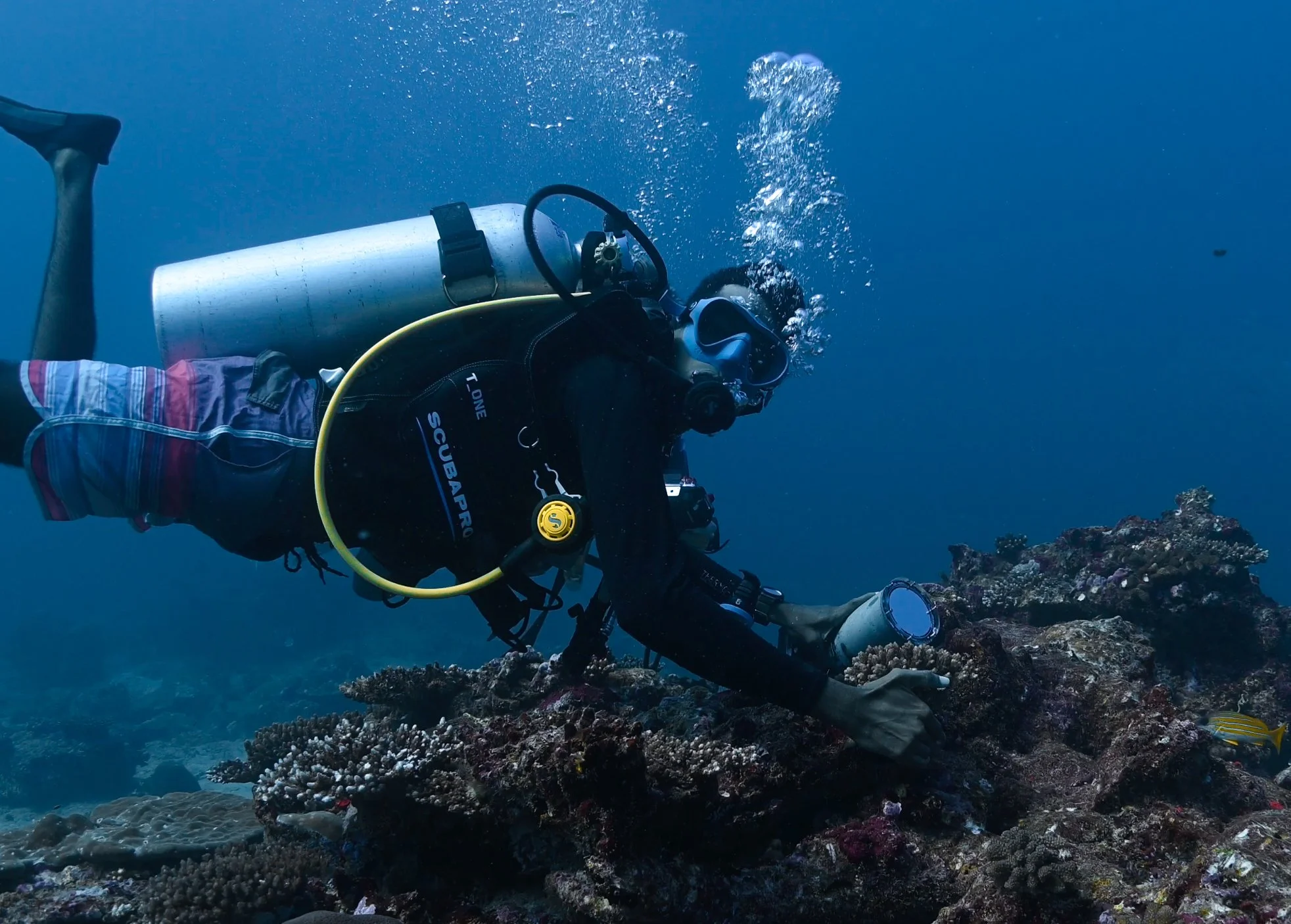
A normal workday for me usually starts early. I wake up around 7:15 a.m., grab some coffee, and by 8:00 a.m., I’m at the dive centre preparing for the day. Depending on our focus of the day, I could be setting up the research equipment I use daily such as the ultrasound system or Stereo Video Photogrammetry (SVP) or preparing the remote underwater systems to be deployed. Making sure all the equipment is charged, tested, and ready is essential, and I usually prepare it the day before to ensure fieldwork runs smoothly.
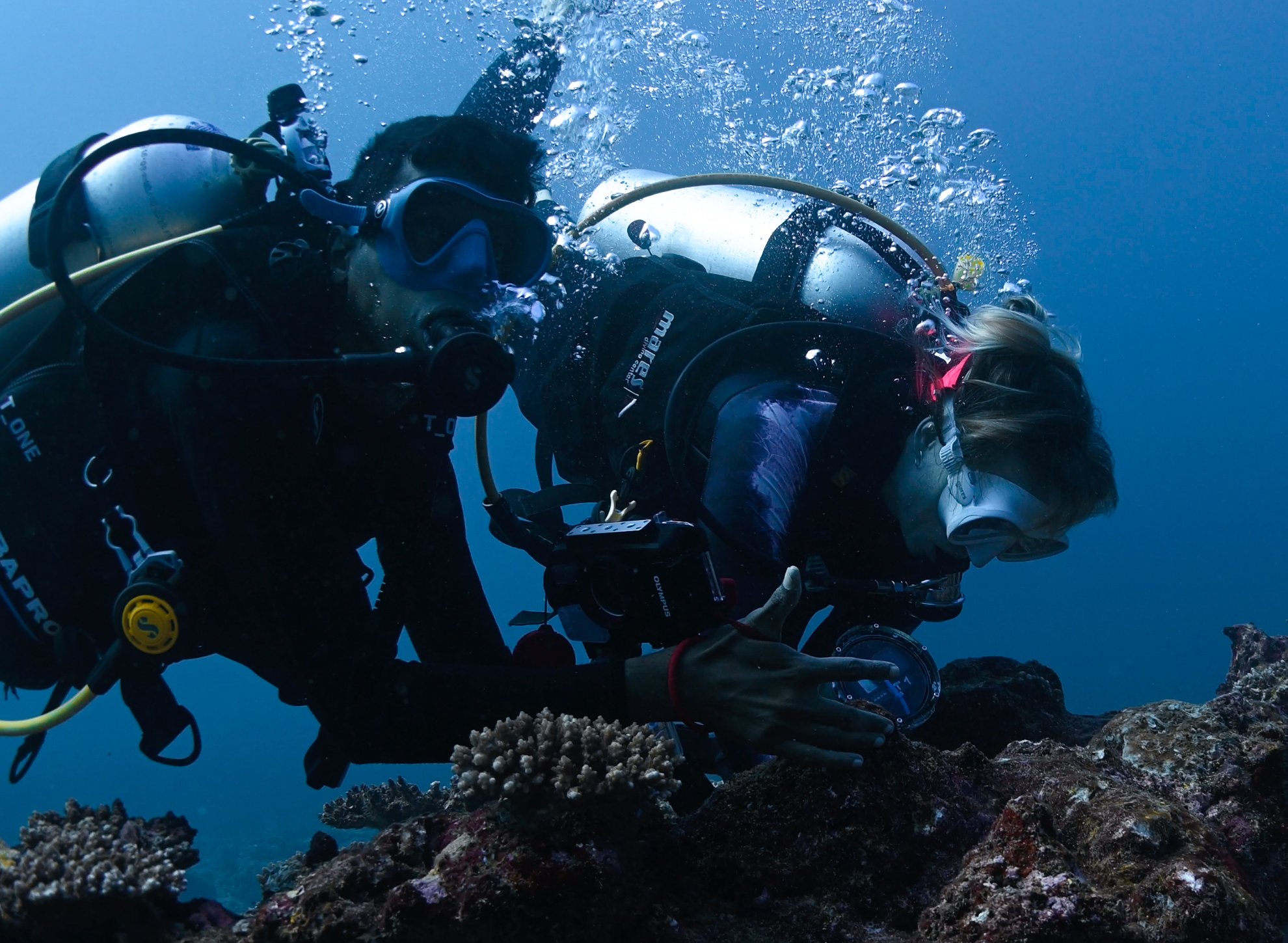
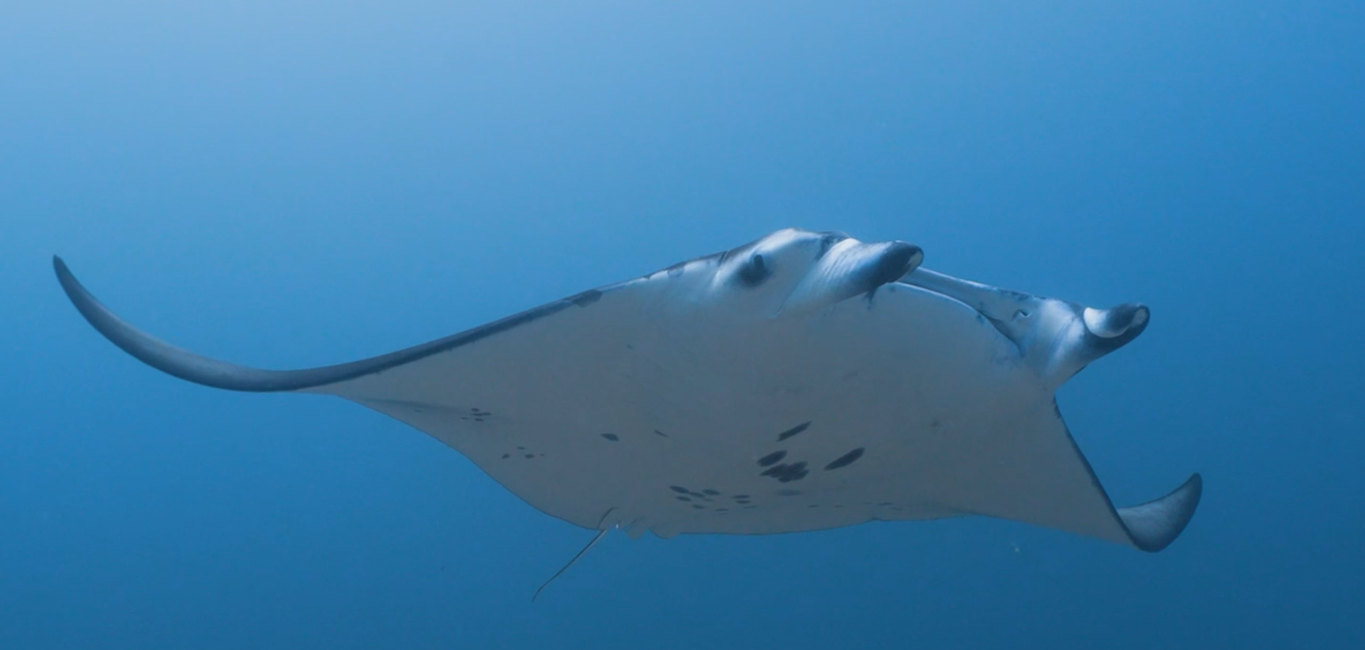
When we head out on a dive to a manta ray cleaning station, I brief guests on the best and safest way to interact with manta rays by following our code of conduct. While underwater, I collect a variety of data: manta ray ID images, observations of mating scars, pregnancy, injuries or “hitchhikers” on the mantas, as well as environmental data like tide state, water visibility, and site conditions. This research helps us understand how manta rays use the atoll and their behaviour at cleaning stations.
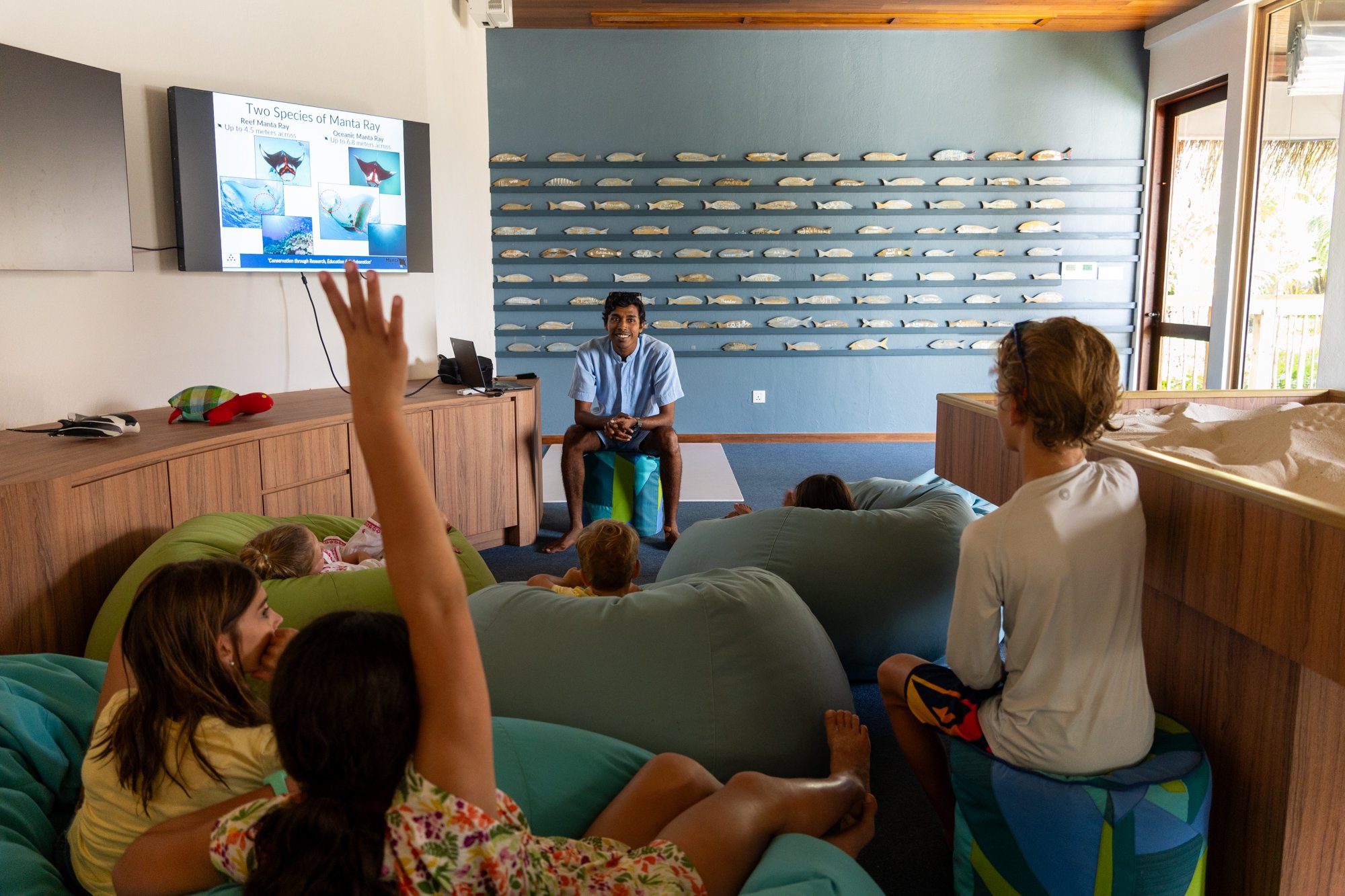
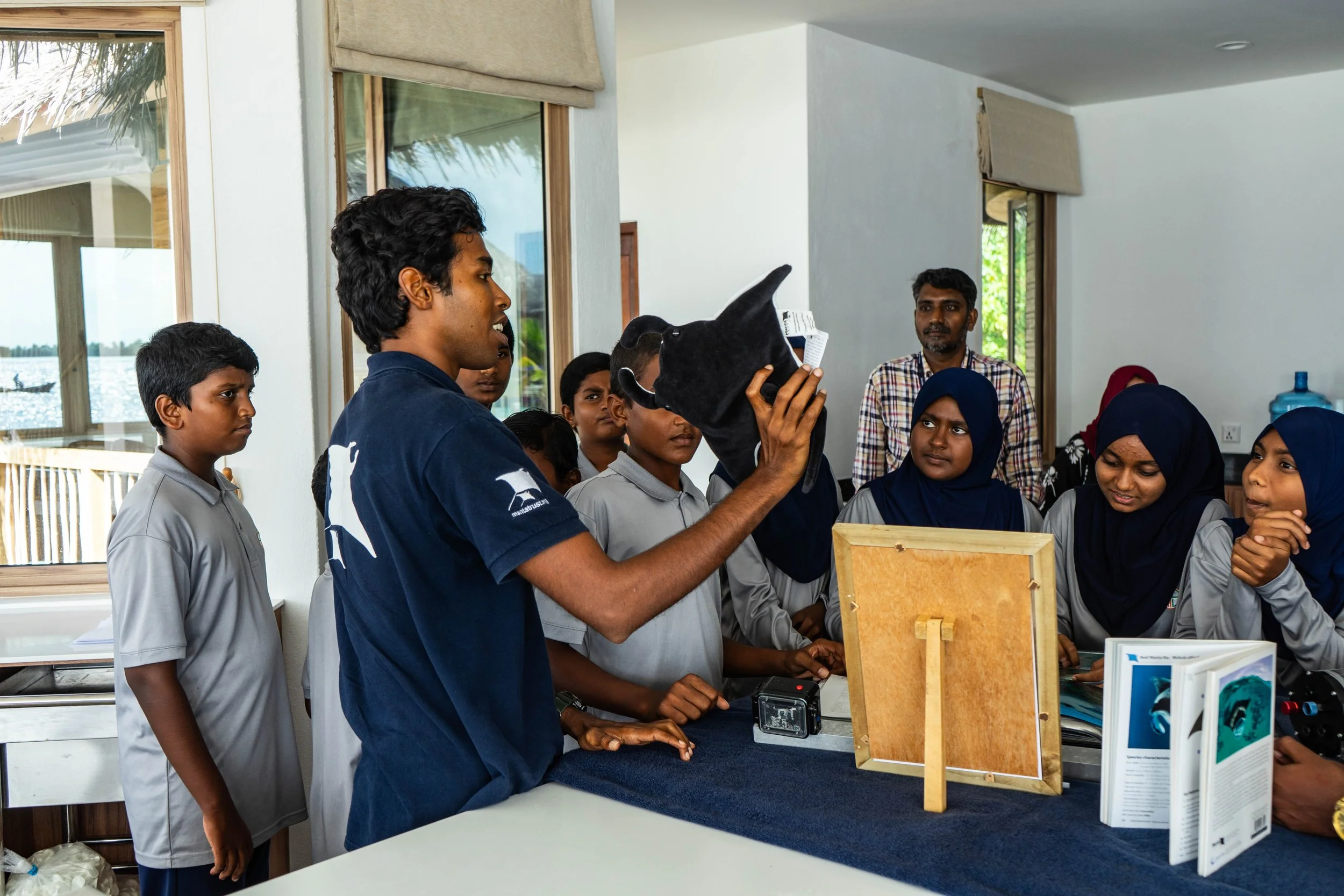
After the morning dives, I return to the office for desk-based work: entering and checking survey data, processing images, and preparing equipment for the next field day. Lunch is usually around midday, followed by a Kids Club session, where I run fun, educational activities with children on the island. We play manta-related games, learn about reef ecosystems, and share manta facts, giving kids a hands-on connection to the ocean.
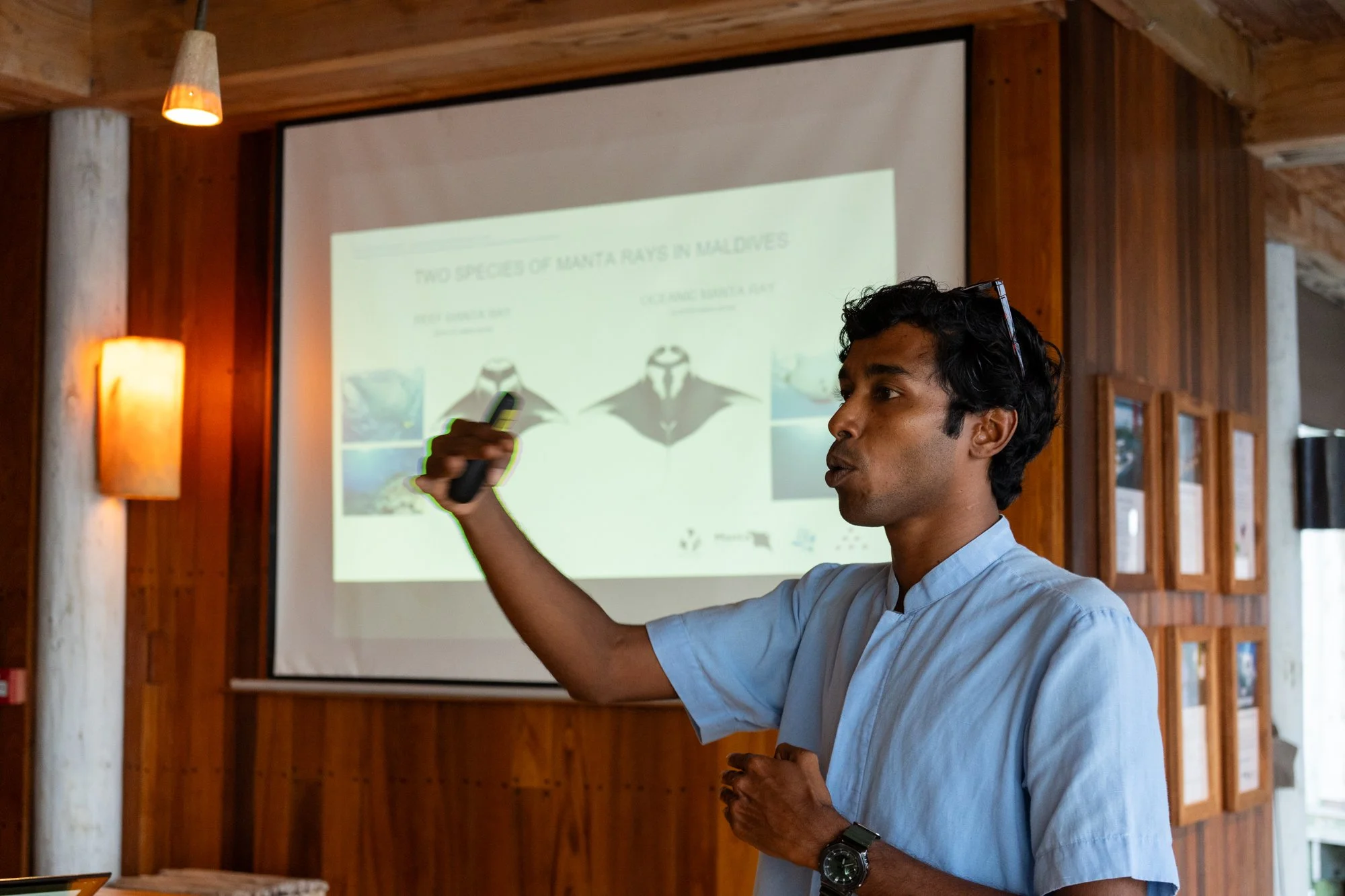
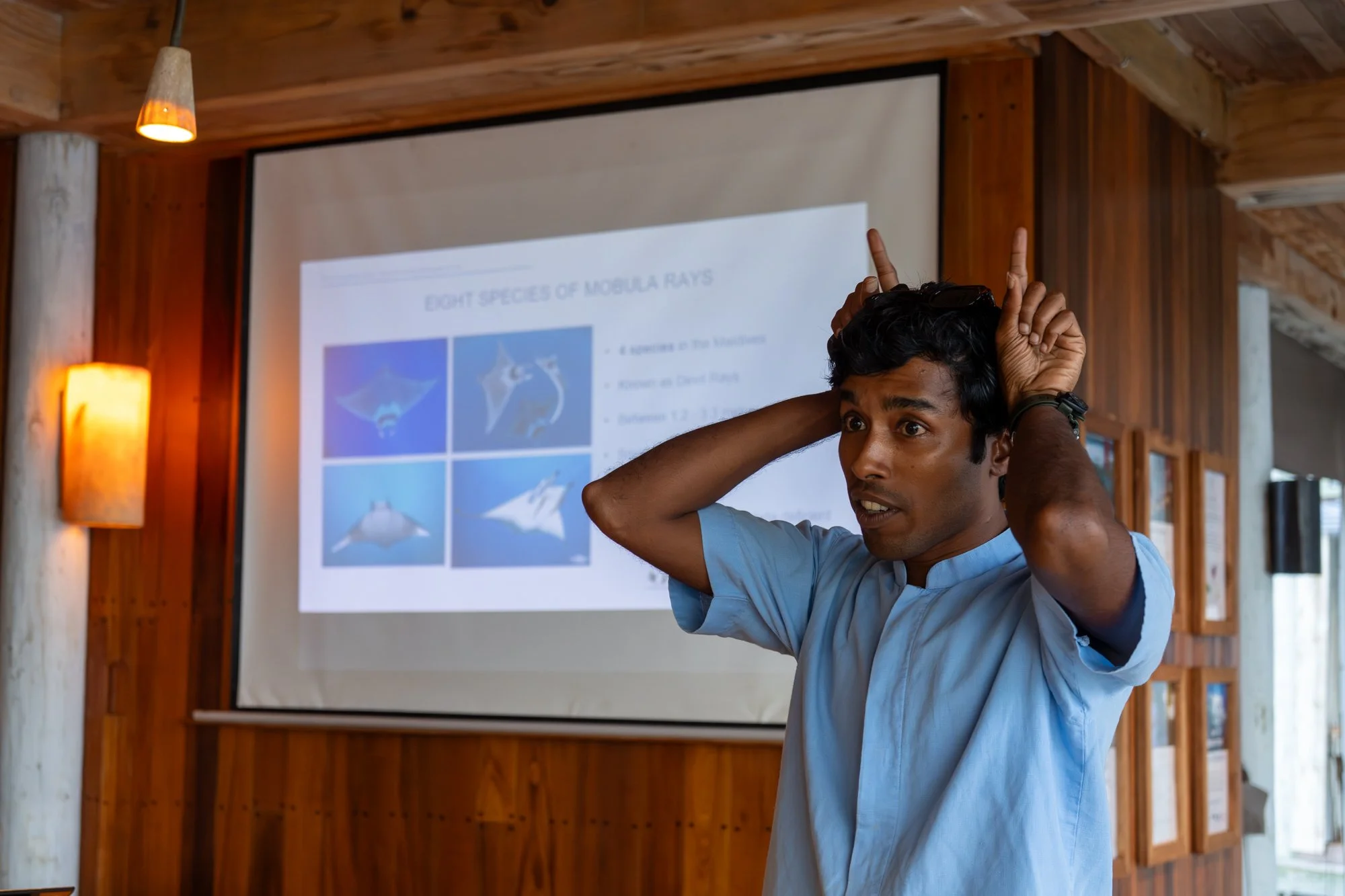
I end the day with a presentation about manta rays at our ice cream bar, ICE, where I share what we’ve been observing and the research we conduct at Six Senses. It’s a chance to connect guests with the manta rays and the wider marine ecosystem, explaining their behaviour and the conservation work we’re doing to protect them.
Project Spotlight
What project are you most involved in right now?
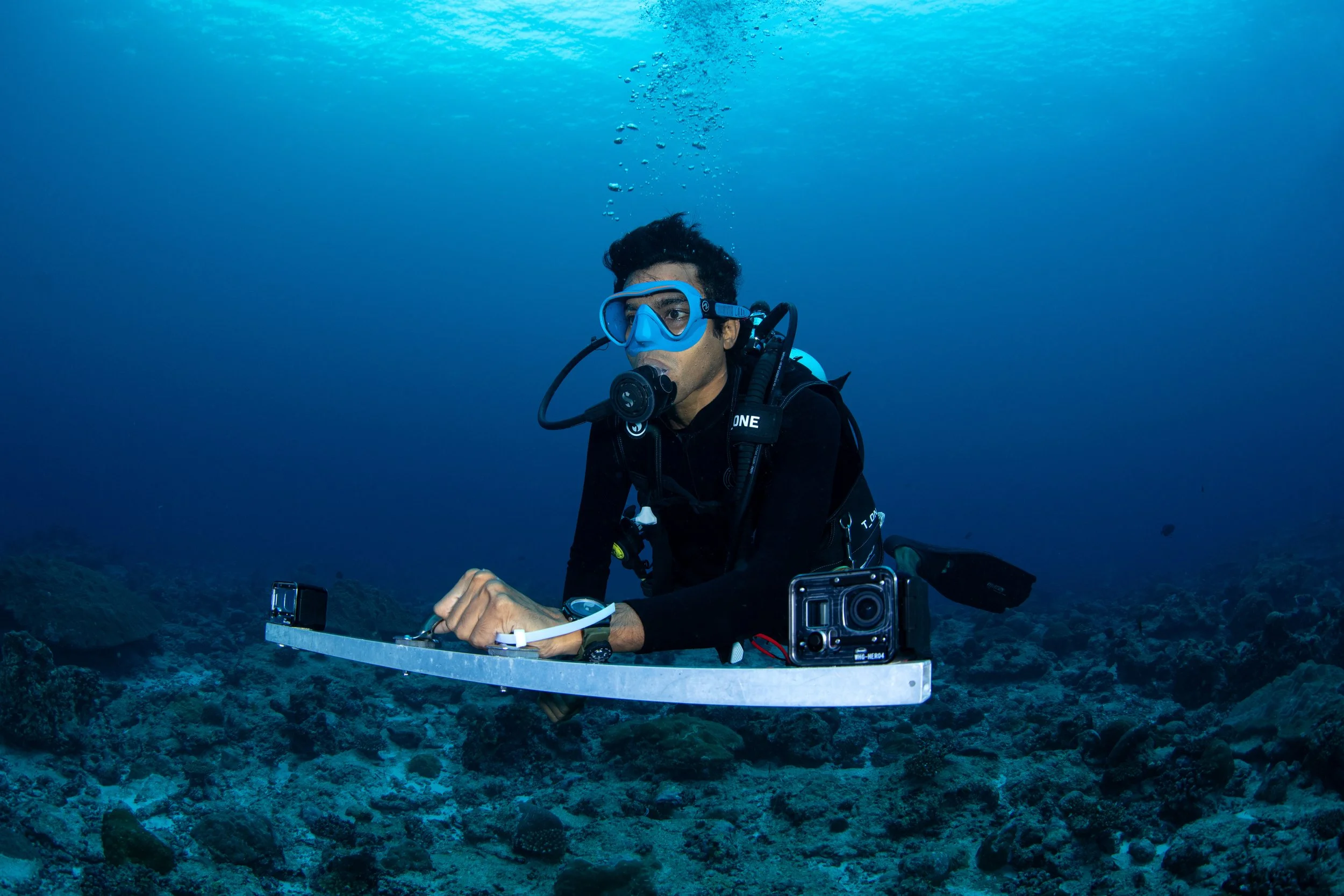
Right now, I’m most involved in the Eyes on the Reef (EOTR) project where I help with everything from field deployments to entering and managing the data afterward. I also spend a lot of time working with Stereo Video Photogrammetry (SVP) and contributing to efforts to better understand Laamu’s resident manta ray population. More recently, I’ve been gaining experience with ultrasound work, which has been a really exciting addition to my role.
What’s one recent moment that made you proud?
One highlight from this year was an EOTR deployment at Fonadhoo where we confirmed 14 individual manta rays and collected ID photos of a new manta in our database. The EOTR system takes photos every minute from 6 a.m. to 6 p.m. over roughly five days, and we deploy it near manta ray cleaning stations to gather detailed data on how these animals use the sites. That experience was a special reminder of why this work matters and the kind of insight careful, consistent research can provide.
What challenges do you face in your work, and how do you overcome them?
Some of the biggest challenges we face are changing dive conditions and equipment that doesn’t always work the way it’s supposed to. Working through these situations has pushed us to adapt in the field, improve our techniques, and develop a better understanding of the equipment. Over time, dealing with these small challenges has made us more confident and efficient during deployments.
Impact & Purpose
Why does your work matter—to you, to the reef, to the community?
My work matters to me because it allows me to directly contribute to protecting the species and habitats I care about. For the reef, the data we collect helps inform conservation strategies and management decisions to ensure species like manta rays can thrive. For the community, it’s about connecting people to the ocean through knowledge and awareness, fostering shared responsibility for marine resources that are culturally, environmentally, and economically important to the Maldives.
What are the biggest changes you’ve seen since working at MUI / or since working in this field?
Since working in the marine field, I’ve seen growing awareness of marine conservation, especially around manta rays and reef protection. At the same time, I’ve noticed increasing pressures on marine ecosystems from human activity and climate change. Seeing both sides has shown me just how important long-term monitoring and collaboration between researchers, tourism operators, and local communities really are.
How do you think tourism can better support marine conservation and the local community?
I think tourism can better support marine conservation by adopting responsible practices, supporting long-term research, and helping educate guests about marine ecosystems. It can also support the local community by creating meaningful employment opportunities, investing in skills development, and making sure local voices are included in conservation and management decisions.
What is one moment with the community where you learned something?
One moment that really stands out for me was talking with local community members who shared their traditional knowledge of the ocean. It reminded me how closely culture, livelihoods, and the sea are interconnected in the Maldives, and reinforced how important it is to combine scientific research with local knowledge to achieve effective and lasting conservation.
Advice & Reflections
What advice would you give to someone wanting to work in marine conservation?
If I were giving advice to someone who wants to work in marine conservation, I’d say get as much hands-on experience as you can. Being in the water, observing marine life, and understanding how ecosystems actually function is incredibly important. At the same time, don’t overlook the desk-based side of the job – tasks like data entry, analysis, report writing, and project organisation are just as essential. Conservation takes time so patience, persistence, and a genuine passion for the ocean truly matter.
How do you stay hopeful in the face of the climate crisis?
Staying hopeful in the face of the climate crisis isn’t always easy, but I try to focus on what can be done locally. Seeing small wins, whether it’s good data coming together, people becoming more aware, or communities getting involved helps remind me that positive change is possible. Small actions add up, and being part of that process helps keep me motivated.
What skills should someone have if they want to work as a marine biologist in a resort environment?
Working as a marine biologist in a resort environment requires a mix of skills. Strong diving and field research skills are important, but so are communication skills. You’re often working with guests, staff, and local communities, so being able to explain science in an accessible way is key. Organisation, flexibility, and problem-solving are also important because no two days are the same, and conditions can change quickly.
If you could make others understand one thing about your job, what would it be?
If there’s one thing I wish people understood about my job, it’s that marine biology is about much more than just diving. While being underwater is a highlight, a lot of the work happens behind the scenes processing data, maintaining equipment, planning projects, and engaging with communities. All of that work is what makes meaningful conservation possible.
If you could tell the world one thing about the ocean, what would it be?
If I could tell the world one thing about the ocean, it would be that the ocean is essential to life on this planet. It regulates our climate, supports livelihoods, and provides food for millions of people. Protecting it isn’t optional – it’s something everyone depends on.
Is there something you wish you would have known before you pursued this career?
Looking back, I wish I had known how much patience this career requires. Conservation and research don’t always show immediate results, but the long-term impact makes it worthwhile. I also wish I had realised earlier how important community engagement and education are, alongside science.
Your favourite thing about the Maldives?
My favourite thing about the Maldives is the ocean itself. The reefs, the marine life, and the way the sea is woven into everyday life and culture make it a truly special place. Living and working here constantly reminds me why protecting the ocean matters.
Day-in-the-Life Snapshot
7:15 AM - Wake Up and get ready for the day
8:00 AM - Head to the dive centre and prepare equipment
8:30 AM - Dive time, for research and educate other divers
12:00 PM - SHELL tour, leading guests through our marine centre
1:00 PM - Lunch
2:00 PM - Office time: entering survey data, processing images, etc
4:00 PM - Manta session with kids club or Junior Marine Biology Program
5:30 PM - Daily team meeting to discuss the day and plans for tomorrow
6:30 PM - Guest presentation about Manta Biology at ICE shop
8:00 PM - Dinner with the team
Anything else you want to say to people?
One thing I’d like to add is how much this work has taught me about patience and curiosity. The ocean is full of surprises, and no matter how much time you spend in the field, there’s always something new to learn. Being open to that and combining it with careful observation is what makes the work so rewarding.
A final question: What’s your favorite quote?
A quote that really resonates with me is by Jacques Cousteau: “People protect what they love.”
For me, it sums up everything about conservation. The more people connect with the ocean and understand its inhabitants, the more likely they are to care for and protect it, and that’s exactly what we aim to do through our research, education, and outreach.