
A DAY IN THE LIFE OF A MARINE BIOLOGIST - SHAROOF - ASSISTANT SEA TURTLE RANGER FOR GAADHOO
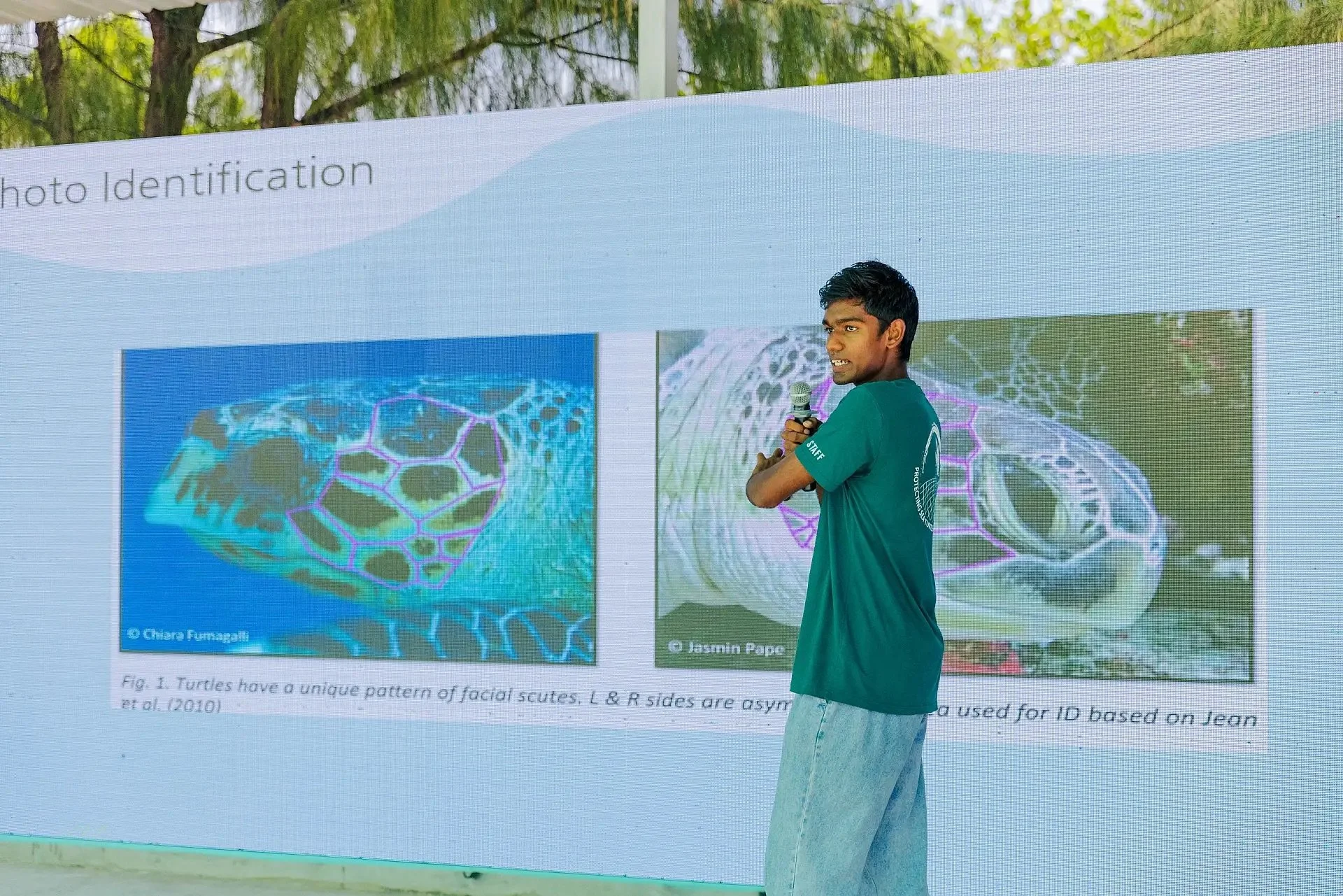
This month in our new series of: “A day in the life of a Marine Biologist”, we will be talking to and learning from Sharoof, our assistant sea turtle ranger for Gaadhoo Island.
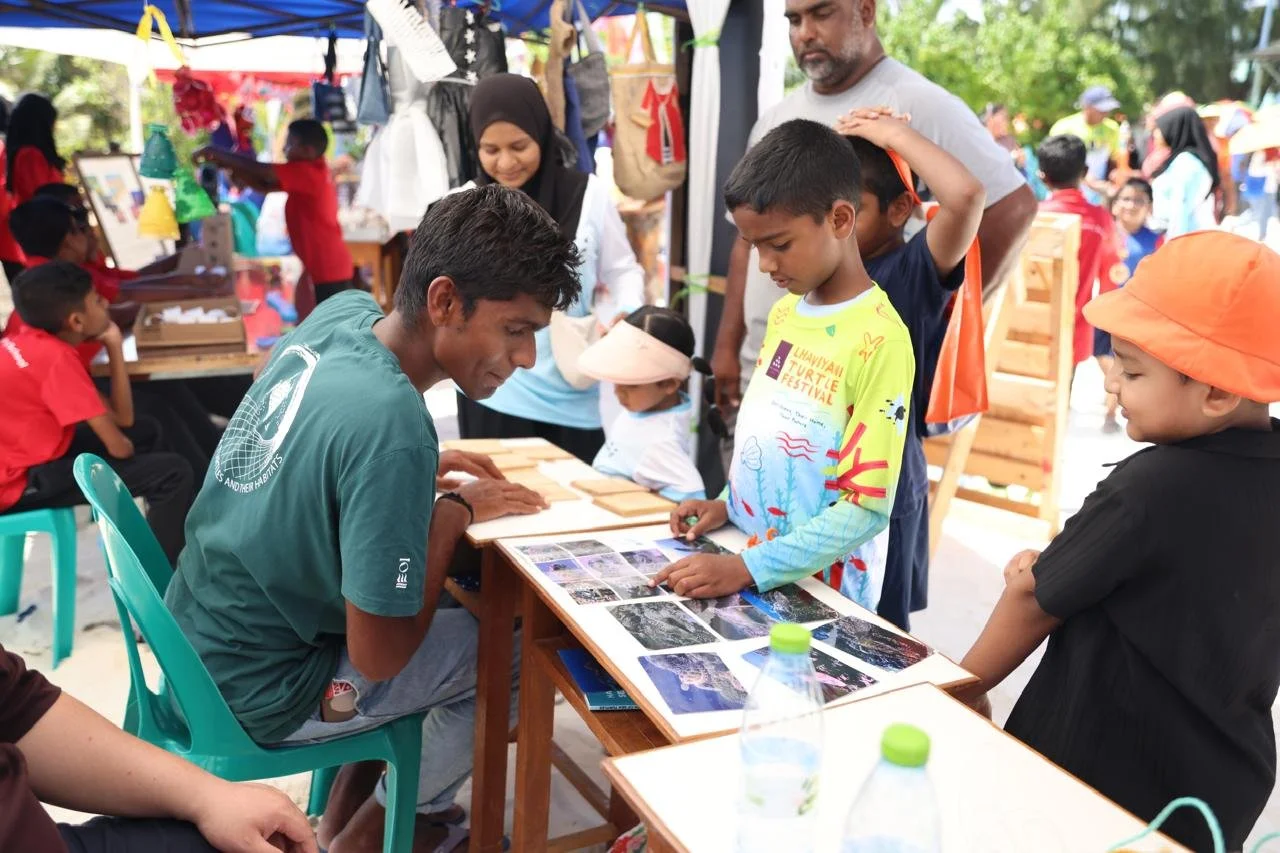
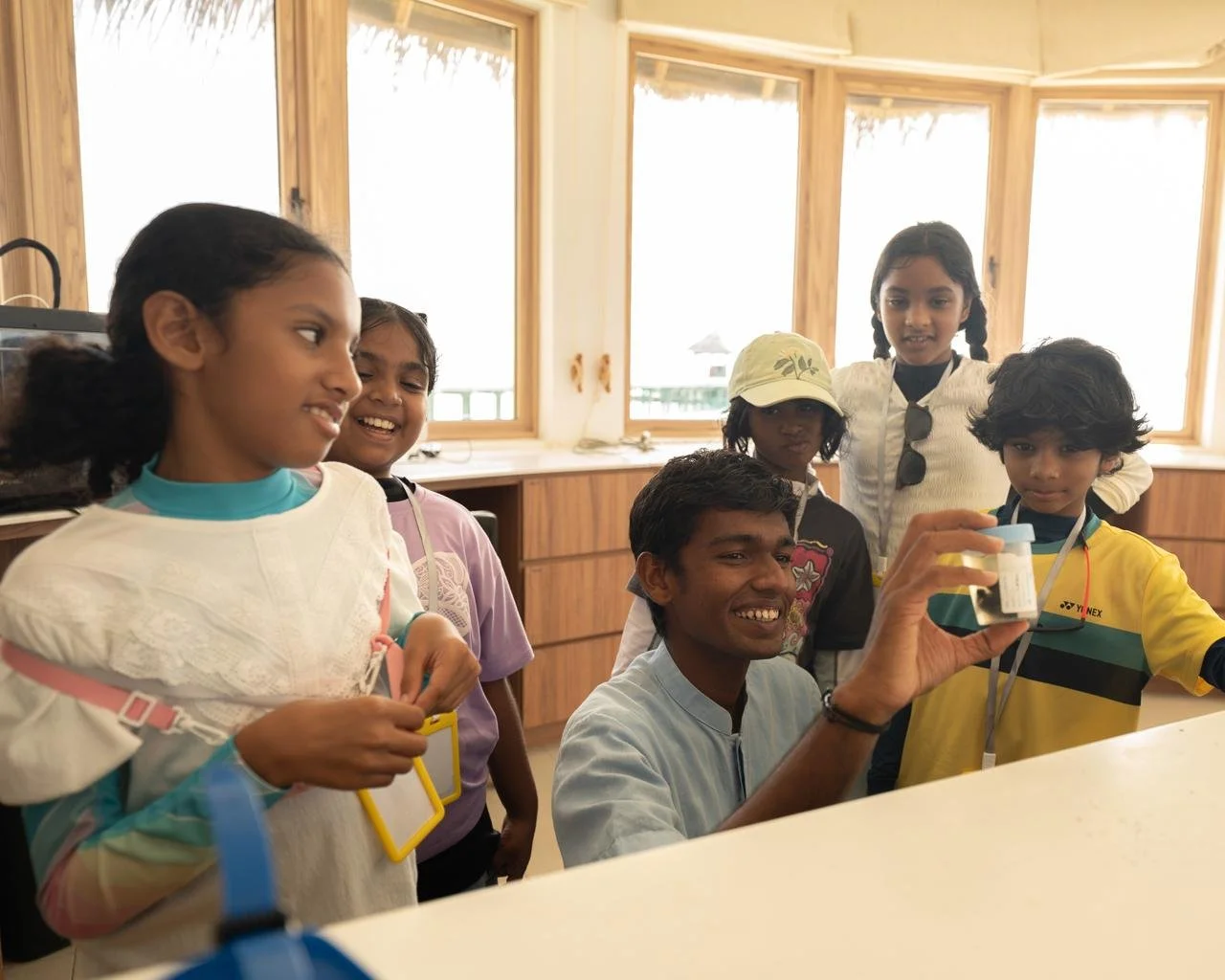
Sharoof is working as the assistant sea turtle ranger at the Olive Ridley Project in collaboration with the Maldives Environmental Regulatory Authority (ERA). His work focuses on sea turtle nesting surveys on L. Gaadhoo, one of the most significant nesting beaches in the Maldives. In addition to his monitoring work, he leads outreach and education sessions in Gan and Fonadhoo, collaborating closely with island and atoll stakeholders to foster community integration into the project and delivering educational content about turtles. Growing up in the Maldives shaped his deep connection to the ocean, and his journey into marine conservation has been driven by a desire to protect the ecosystems that defines both the Maldives and its residents and a hope to conserve the environment for future generations.
What inspired you to become a marine biologist?
Growing up on a local island in the Maldives, surrounded by the ocean, the ocean was always part of my everyday life. I fell in love with the scenery, the colours and the wildlife. Over time, I began to notice changes in reefs and beaches, which made me want to understand and protect what I was seeing.
Can you tell us a bit about your journey—how did you end up working with MUI?
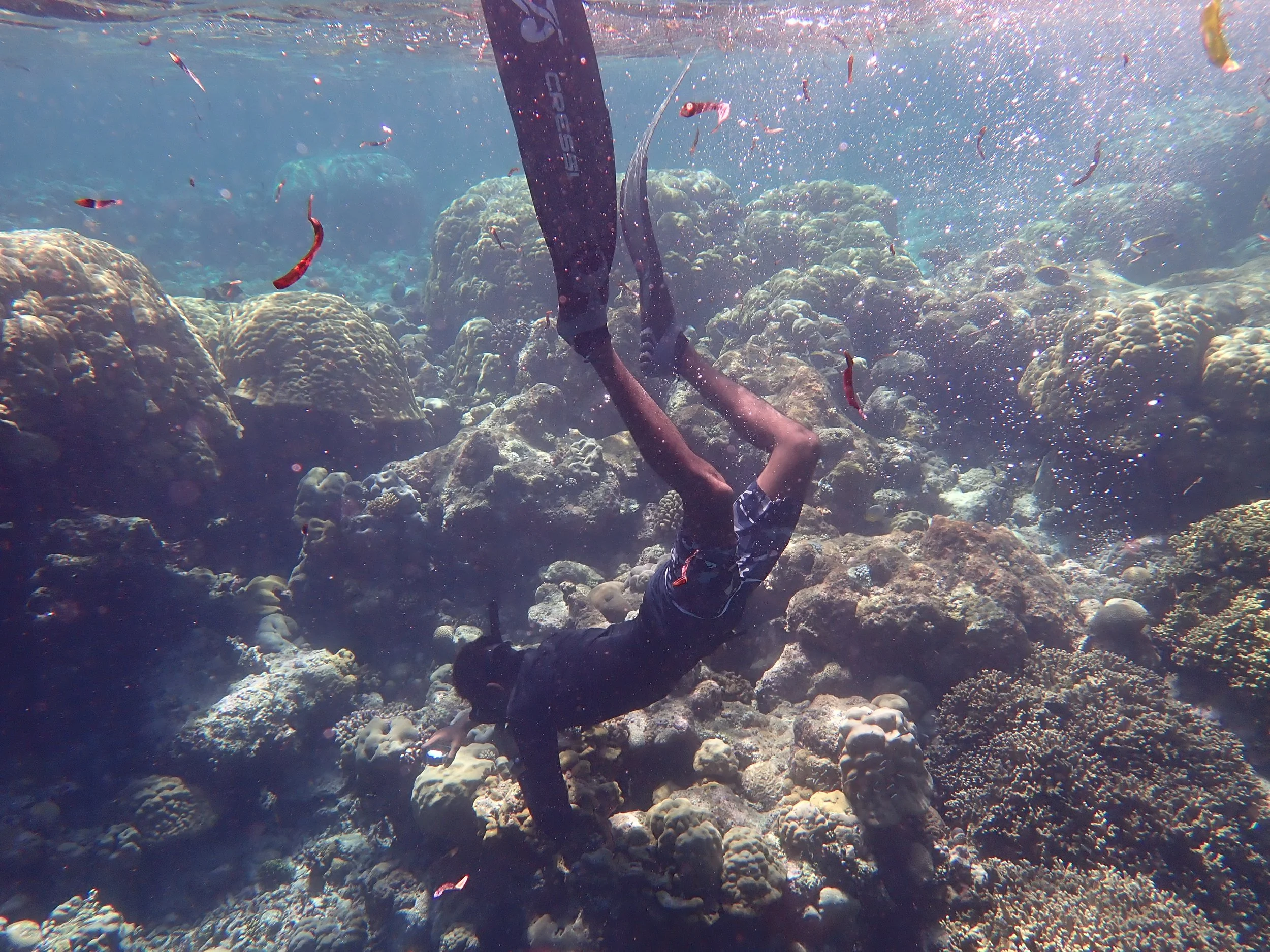
My journey into this field started with a certificate course in Environmental Management I did at Maldives National University. There I met Inan, the Sea Turtle Ranger Programme Coordinator, who took me along on surveys to L. Gaadhoo. After that, I interned with Maldives Resilient Reefs where I started diving and learned more about the marine environment. And then the Sea Turtle Biologist Intern role opened at Six Senses Laamu, there I learned more about turtles and their behaviours. After completing the internship I continued working with ORP and started as the Assistant Sea Turtle Ranger.
What’s something most people don’t realize about marine biology / working with the community?
People often think marine conservation is all time spent in the ocean, but a lot of the work happens behind a desk, there is a lot of things to write and report. And sometimes the community might be against what you’re doing, it’s important to not be discouraged and talk to them and find a way to work alongside the community. It takes real passion, because results can take years to become visible, especially in sea turtle conservation. Even so, it’s important to remember that the work you’re doing truly matters.
A Typical Day
What does a normal workday look like for you?
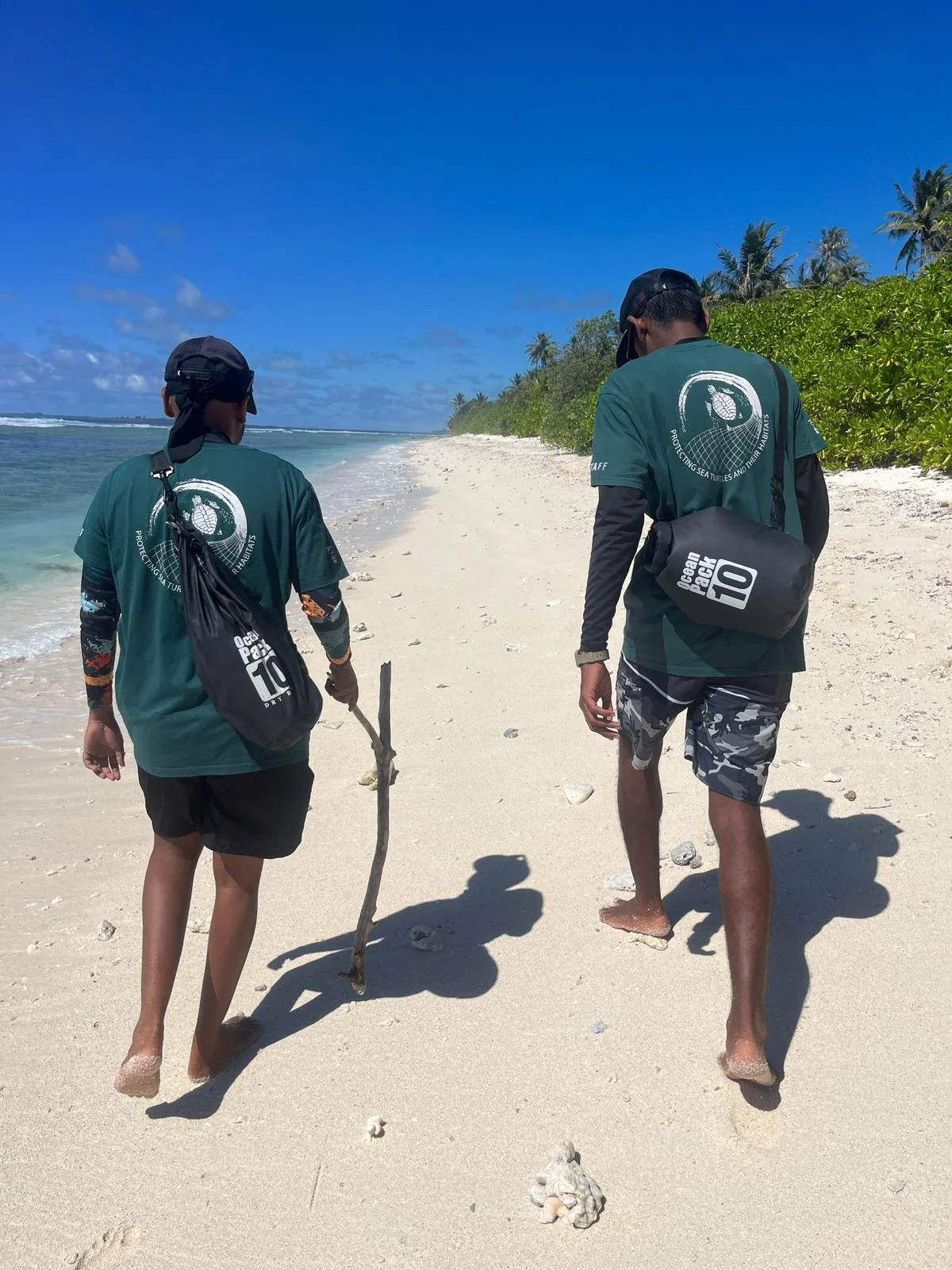
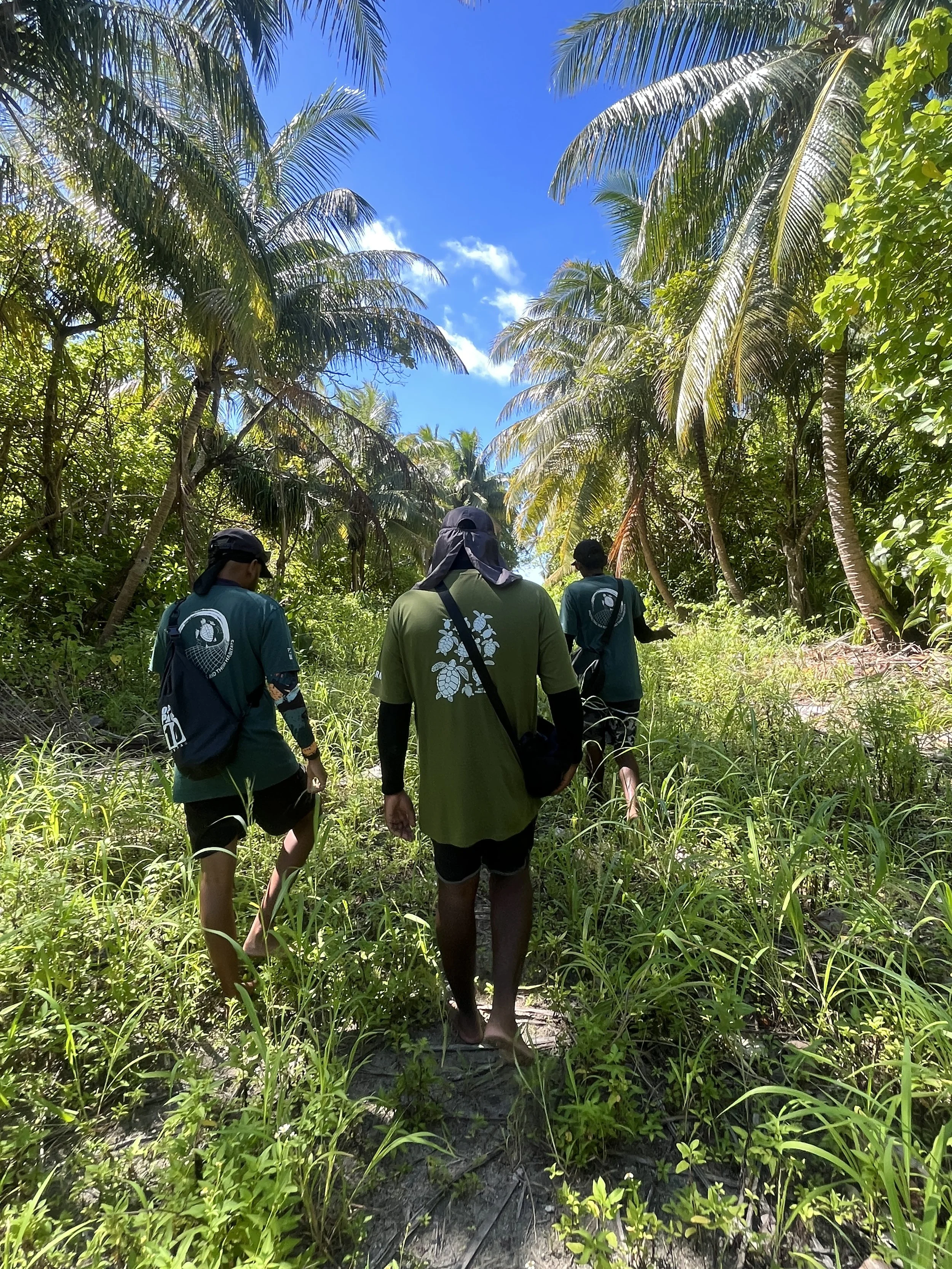
No two days are the same, which is one of the things that makes this job so exciting. It can include getting on a dinghy early morning to go to Gaadhoo and doing beach surveys around the nesting beaches, community outreach and awareness sessions, data entry, and flying the drone for hours late at night monitoring the nesting beach.
What kind of data or observations are you usually collecting?
Most often the location of turtle nests and track width. And recording how far up it is from the high tide line and how far its in the vegetation. Observing signs of illegal take and logging the coordinates is also part of the job.
What tools or tech do you use regularly?
For nest monitoring GPS, measuring tape, camera and we cant forget Microsoft excel. The most impressive bit of tech we use is ther Mavic 3T drone, which has a thermal sensing camera to assist out night surveys for poaching.
What’s one recent moment that made you proud?
Saving a trapped hatchling during an excavation (done under strict permits from ERA) and knowing that this hatchling might be the one in one thousand that survives to adulthood.
What challenges do you face in your work, and how do you overcome them?
Mostly weather, rough seas limit transportation to Gaadhoo, and depending on the weather the nesting beach could go days or even weeks without any monitoring, it also limits drone monitoring. Additionally, nests might get flooded due to unexpected high tides. There is really no way to overcome nature. But it’s a great feeling when we can go to Gaadhoo again and see the nests are safe.
Impact & Purpose
Why does your work matter—to you, to the reef, to the community?
It protects an endangered species, I feel that having these amazing creatures in our oceans is part of our identity. And by protecting these species and its ecosystem we help pass on these wonders to the next generation.
What are the biggest changes you’ve seen since working at MUI / or since working in this field?
Increased number of local youths coming into the field. Some of my former classmates are part of different conservation NGOs and it makes me happy that more young people are becoming interested in this field.
How do you think tourism can better support marine conservation?
By investing in conservation projects and following guidelines.
What is one moment with the community where you learned something?
Some behaviors of marine megafauna from local fishermen. Like how turtles usually come up to nest during hightide. And how to find sea turtle nests from former residents of Gaadhoo.
Advice & Reflections
What advice would you give to someone wanting to work in marine conservation?
Do volunteer work whenever you can and build connections. Getting experience and networking is just as important as education in this field.
How do you stay hopeful in the face of the climate crisis?
By counting and celebrating small wins, believing every protected nest and every successful outreach session is a reason to stay hopeful. And seeing the younger generation more invested in conservation encourages me to continue doing what I’m doing.
If you could make others understand one thing about your job, what would it be?
It’s not as simple as it seems. The job can be both stressful and dangerous at times, most monitoring surveys are alone so most of the time I’m on edge. And not getting encouragement from the community can sometimes feel like what I’m doing isn’t impactful, but it gives me hope that when I talk to some members of the community, they support what I’m doing and are willing to learn more.
If you could tell the world one thing about the ocean, what would it be?
Protecting the oceans is essential for our future, especially in the Maldives. Our livelihoods are connected to the ocean. Protecting our oceans means protecting our home.
Is there something you wish you would have known before you pursued this career?
That maths and data analysis are a big part of the job. Being able to analyse data and present statistics is essential in conservation work.
Your favourite thing about the Maldives?
How our everyday life is directly connected to the ocean, weather its food or recreational activities. And how the ocean is our home and our heritage.

Day-in-the-Life Snapshot
6:00 AM - Wake up and have breakfast
7:30 AM – Prepare equipment for going to survey at Gaadhoo
9:00 AM – Get on a dinghy to go to Gaadhoo, do beach patrol and survey.
11:00 AM – Come back after survey
1:00 PM - Lunch
2:00 PM – Data entry
5:30 PM – Setting up logistics for next survey
6:00 PM – Wrap up data entry and reporting
7:00 PM - 00:00 AM – Rest + dinner
00:00 AM - 03:00 AM – Flying drone over Gaadhoo nesting beach from Fonadhoo to monitor for any signs of illegal take.
What’s your favorite quote?
“I believe the ocean has given us so much and i think it's time we give back the love and care that it deserves.”